


WELCOME FROM THE CONFERENCE CHAIR
Learning at the edge
Dear colleague,
It is our great pleasure to invite you to the XXII Iberian International Business Conference (IIBC), to be held in Vigo, Spain, from Thursday 14 to Saturday 16 October 2027, and hosted by the Faculty of Economics and Business Administration of the University of Vigo. The IIBC has long brought together scholars from Portugal and Spain, while remaining open to the wider international community, to present research, exchange ideas, question established assumptions, and build relationships in the open and collegial atmosphere that has become part of the conference's identity.
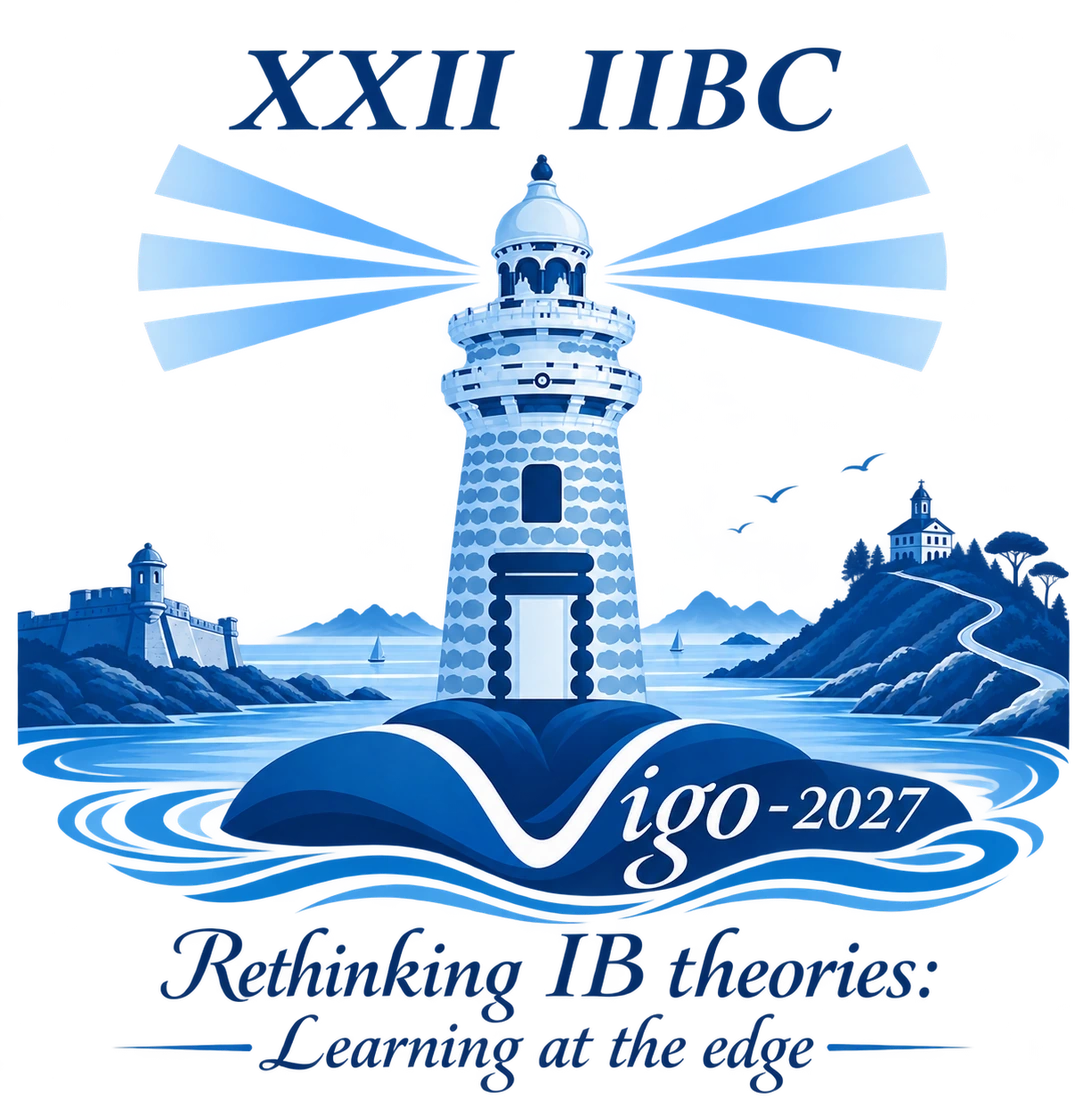
The theme of the 2027 conference is Learning at the edge: rethinking IB theories.
There could hardly be a more appropriate time to ask what our theories still illuminate—and what remains beyond the reach of their light, much like the lighthouse of the Cíes Islands, casting its beam through the mist to guide those navigating uncertain waters.
International Business was built to understand a world in movement. Yet that world is moving unusually fast: artificial intelligence is reshaping knowledge and organisations; geopolitical fragmentation is unsettling trade, investment and global value chains; and technological leadership is shifting across economies, with China increasingly occupying positions once associated with other parts of the world. These are not isolated shocks. They are signs of a world in which change is becoming less linear and prediction more difficult. Our theories were never intended to be photographs of a motionless world, but neither should we assume that they can travel indefinitely simply because they have travelled well before.
This is what we mean by the edge.
The edge is where established explanations meet new conditions: different institutions, firms, technologies, places and temporal trajectories; acceleration, interruption, reversal and unexpected outcomes. Edges are fertile ground for learning because anomalies expose assumptions, reversals reveal mechanisms, and unfamiliar contexts can make visible what remained hidden at the centre. What appears peripheral can sometimes illuminate the core.
We chose rethinking because theories live by being revisited: they draw nourishment from new evidence, new contexts and the questions that emerge when established explanations reach their boundaries. We chose learning because this is also what a conference should be—a place where ideas travel, collide, change direction and occasionally return transformed.
And perhaps Vigo is an especially fitting place from which to have that conversation.
We meet on the Atlantic edge of Europe, in Galicia, beside Portugal, in a territory whose history has been shaped not only by borders but also by what crosses them: language, people, trade, knowledge and ideas. Here, an edge is not simply an ending. It is also an interface. The sea in front of us has never been merely a boundary; for centuries, it has also been a route towards somewhere else.
That is the meaning we would like our lighthouse to carry for IIBC 2027. A lighthouse does not calm the sea. It does not remove uncertainty, move the rocks or decide the destination. It simply helps us to see where we are. Science, at its best, does much the same.
We particularly, but not exclusively, welcome research on:
- the boundaries, evolution and integration of established IB theories;
- internationalisation processes, trajectories and performance, including acceleration, interruption, reversal and re-entry;
- artificial intelligence, digitalisation and their implications for knowledge, location, business models and international strategy;
- geopolitical uncertainty, institutional change, political risk and the reconfiguration of global value chains;
- international entrepreneurship, SMEs, born globals, multinational enterprises and emerging organisational forms;
- institutions, networks, embeddedness, culture and cross-cultural management;
- knowledge, learning, innovation, capabilities and managerial cognition in international contexts;
- global strategy, governance, ownership, foreign direct investment, sourcing and international operations;
- sustainability, ESG, responsible business and environmental transitions;
- international marketing, consumer behaviour, people, leadership and diversity across borders;
- emerging markets, changing centres of economic and technological leadership, and underexplored geographical or institutional contexts;
- new theoretical, methodological and empirical approaches to International Business.
Contributions addressing other established or emerging areas of International Business are equally welcome.
We look forward to welcoming you to Vigo in October 2027.